
What should residents expect from a safe assisted living setting?
In Ridgway, PA, assisted living residents should be able to expect a clean, orderly, and prepared living environment. Safety is not limited to preventing falls or responding to emergencies; it also includes reducing infections, recognizing illness early, protecting personal information, and maintaining clear procedures for staff, visitors, and residents.
Pennsylvania regulates assisted living residences and personal care homes through licensing requirements covering resident health, staff training, physical conditions, nutrition, emergency preparedness, and related safety issues. Each setting should also have procedures for identifying, reporting, and responding to communicable diseases.
A strong safety program usually includes:
- Staff training in hand hygiene, personal protective equipment, emergency response, and resident assistance
- Written procedures for illness reporting, cleaning, medication handling, and unusual incidents
- Safe storage of medications, cleaning chemicals, and medical supplies
- Clear plans for fire, severe weather, power outages, missing residents, and medical emergencies
- Regular review of accidents, infections, and other events to identify patterns
Residents and families have a right to ask how these procedures work. Clear answers are more useful than general assurances.
How are infections prevented in assisted living?
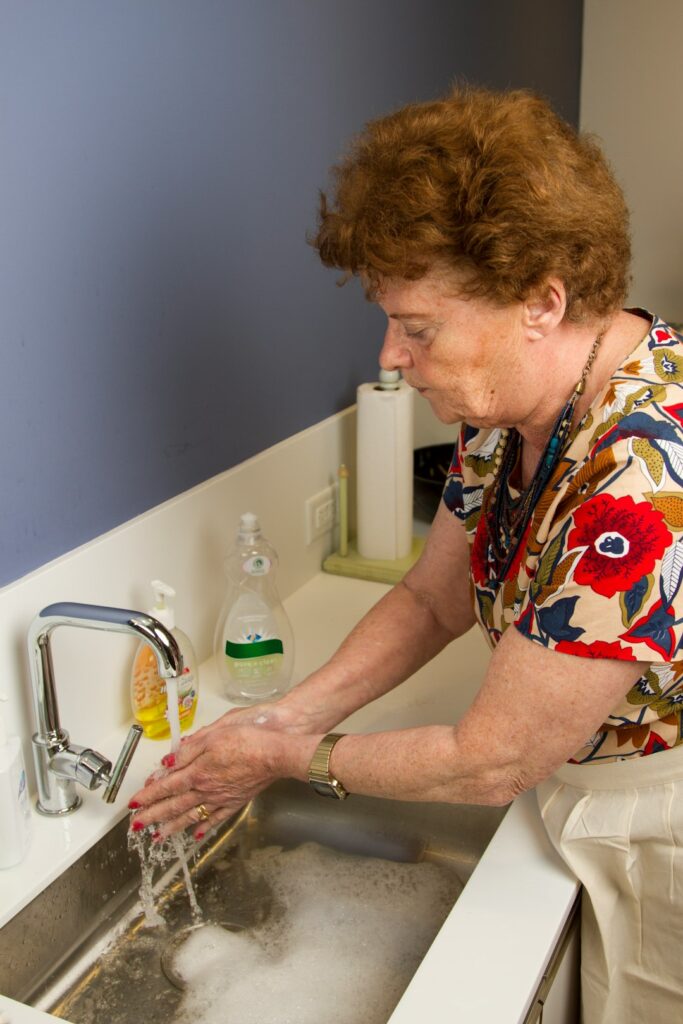
Infection prevention depends on several routine practices working together. Hand hygiene is one of the most important. Staff should clean their hands before and after helping with personal care, handling food, assisting with medications, touching medical equipment, or caring for someone who is ill.
Residents and visitors should also clean their hands:
- Before meals and snacks
- After using the bathroom
- After coughing, sneezing, or blowing the nose
- After touching shared equipment or frequently handled surfaces
- When entering or leaving a resident’s room during an illness
Alcohol-based hand sanitizer is useful when hands are not visibly dirty. Soap and water are needed when hands are visibly soiled and are especially important after suspected exposure to certain gastrointestinal illnesses.
Cleaning is separate from hand hygiene. Shared bathrooms, dining areas, door handles, railings, elevator buttons, activity equipment, and mobility devices require regular cleaning and disinfection. Staff should follow the product’s directions, including the required wet contact time. Simply wiping a surface and immediately drying it may not provide adequate disinfection.
What happens when a resident develops symptoms?
A resident with new fever, cough, sore throat, shortness of breath, vomiting, diarrhea, unusual fatigue, or a sudden change in behavior should be assessed promptly. Older adults do not always show a typical fever or may first appear confused, weak, less interested in food, or unusually sleepy.
The response may include:
- Checking symptoms and notifying the appropriate medical contact
- Encouraging fluids when safe and appropriate
- Limiting close contact with other residents until the situation is understood
- Increasing cleaning of shared surfaces
- Using masks or other protective equipment when indicated
- Testing or treatment based on clinical guidance
- Notifying family members according to privacy rules and facility policy
Residents should not be left to decide on their own whether symptoms are serious. New breathing difficulty, chest pain, bluish lips, severe dehydration, sudden weakness, or a major change in alertness requires urgent medical attention.
A common misconception is that isolation always means a resident is being punished or denied social contact. Temporary separation can be a protective measure, but it should be explained respectfully and balanced with emotional support, communication, and safe alternatives for connection.
How do seasonal conditions affect safety in Ridgway?
Cold winters, snow, ice, wet entrances, and reduced daylight can increase fall and transportation risks. Meltwater tracked indoors can make floors slippery even when outdoor conditions are improving. Residents should have access to appropriate footwear, stable mobility aids, adequate lighting, and prompt removal of snow and ice from walkways.
Seasonal respiratory illnesses also place additional pressure on shared living environments. During periods of increased flu, COVID-19, or respiratory syncytial virus activity, facilities may use additional measures such as symptom screening, masking in selected circumstances, visitor guidance, improved ventilation, or temporary changes to group activities.
Warm-weather conditions create different concerns. Heat can worsen dehydration, dizziness, medication side effects, and confusion. Indoor spaces should remain comfortably conditioned, and residents who have difficulty sensing thirst may need reminders to drink fluids. Emergency plans should address power interruptions because heating and cooling failures can quickly become dangerous for older adults.
What daily safety measures reduce falls and injuries?
Fall prevention should be individualized rather than based on a single rule for every resident. Staff should understand a resident’s mobility, vision, hearing, balance, footwear, medications, and history of previous falls.

Useful measures may include:
- Keeping pathways free of cords, clutter, and loose rugs
- Using night-lights and adequate bathroom lighting
- Placing frequently used items within easy reach
- Checking that walkers, canes, wheelchairs, and transfer equipment are correctly maintained
- Providing assistance with bathing, toileting, and transfers when needed
- Reviewing dizziness or drowsiness that may be related to medication
- Reporting near-falls, not only injuries
A resident who falls should be evaluated before being helped up if there is possible head, neck, hip, or back injury. Staff should document the event and look for contributing factors, such as poor lighting, wet flooring, hurried transfers, or a recent change in health.
How are medications and personal care made safer?
Medication safety includes correct identification, timing, storage, documentation, and observation for side effects. Residents and families should be able to ask who administers medications, how missed doses are handled, and how changes from a prescriber are communicated.
Personal care also requires infection-control precautions. Gloves may be appropriate when contact with blood, body fluids, mucous membranes, or non-intact skin is expected. Gloves do not replace hand hygiene and should be changed between tasks and residents.
Certain equipment should never be shared without proper cleaning or dedicated supplies. This includes blood-glucose testing equipment, wound-care materials, thermometers, and other items that may contact blood or bodily fluids. A facility should have a clear process for preventing cross-contamination.
What should visitors and families do?
Visitors help protect the whole community by staying away when sick, cleaning their hands on arrival, covering coughs and sneezes, and following temporary precautions during outbreaks. Young children or visitors who cannot follow basic hygiene directions may need additional supervision.
Families should tell staff about recent exposure to contagious illness, new symptoms, or a resident’s change in condition. They should also ask how updates will be communicated if an outbreak affects activities, dining, visitation, or transportation.
Residents can reasonably ask:
- How are illness concerns reported?
- What symptoms lead to additional precautions?
- How often are shared surfaces and equipment disinfected?
- What is the emergency plan for a power outage or severe winter weather?
- How are falls and near-falls reviewed?
- How are families notified about outbreaks or significant changes?
The most reliable safety programs are visible in everyday details: clean hands, uncluttered halls, prompt attention to symptoms, respectful communication, and staff who follow the same procedures consistently.
